Trade unions already confront employers using data to monitor work. Daniele-Hadi Irandoost and David William Parry argue that the left must also challenge the surveillance of workers as political actors by the state.
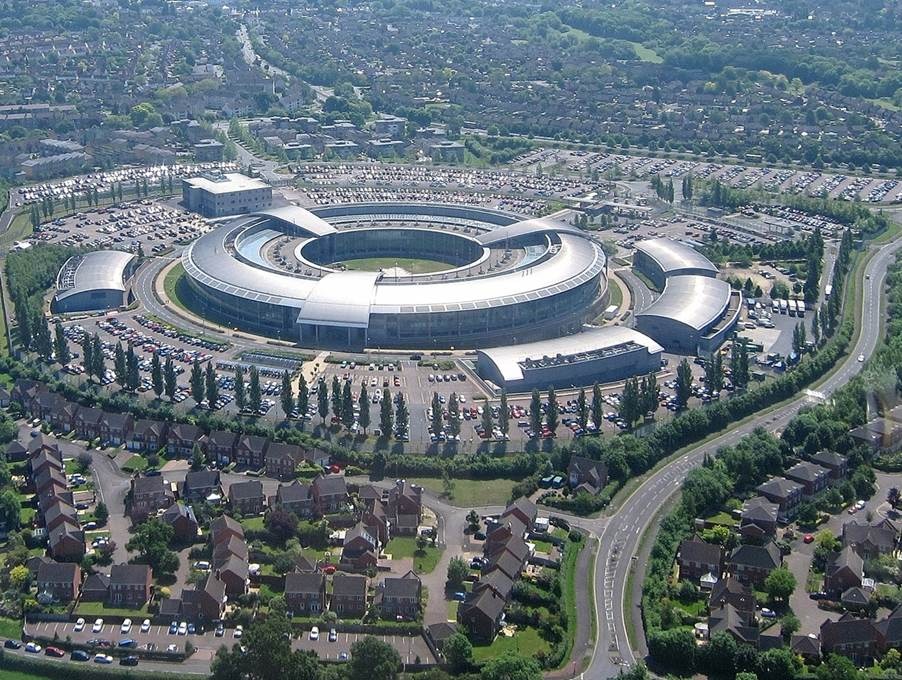
In 1984, Margaret Thatcher’s government ordered employees of Government Communications Headquarters, better known as GCHQ, to surrender their trade union membership. Fourteen workers were eventually dismissed after refusing. Unions campaigned until their rights were restored in May 1997. For thirteen years, national security had acquired a curious enemy: the trade union card carried by a government employee.
State surveillance also fed industrial blacklisting. In 2009, the Information Commissioner’s Office uncovered the Consulting Association’s database of construction workers. The files recorded union activity, safety complaints and political involvement. Evidence before the Undercover Policing Inquiry raised questions about police intelligence entering blacklisting networks. Some workers discovered the records only after years without work.
A similar connection between corporate interests and political surveillance appeared in Scotland. Rob Evans and Paul Lewis reported in The Guardian in 2011 that ScottishPower and other energy companies had hired Vericola, a private security firm to monitor environmental campaign networks.1 ScottishPower’s security operation was led by a former head of Strathclyde Police Special Branch. Political policing methods gave the company warning of opposition to its projects. Corporate access to political intelligence went further. Dave Morris, a London Greenpeace campaigner and one of the two McLibel defendants, told the Undercover Policing Inquiry that an officer inside the group monitored legal advice. The restaurant chain McDonald’s had sued campaigners over a leaflet critical of its employment, environmental and business practices.
Such infiltration required an officer to win the confidence of a group. Communications surveillance removes much of that practical burden. Data about calls, messages and online activity can identify recurring contacts and central organisers. Applied across a network, these records can expose the structure of a union branch and reveal preparations for collective action before they are announced. Employer monitoring is therefore only part of the problem. Unions already confront productivity scoring, location tracking and algorithmic management at work. State surveillance concerns workers when they meet, organise and exercise political power beyond it. The practices connect when employers pass information to public authorities or agencies obtain records created through commercial services.
Snowden’s accountability shock
By 2013, Britain had established commissioners alongside parliamentary and judicial oversight of intelligence power. Edward Snowden, an intelligence contractor working inside the United States surveillance apparatus, disclosed interception and intelligence sharing that official oversight bodies had neither exposed nor effectively constrained. Snowden’s disclosures produced the public reckoning that formal oversight had failed to deliver. Intelligence agencies had been supervised under conditions of secrecy while their powers remained beyond democratic judgement.
Commercial platforms had meanwhile become part of political organisation. They offered inexpensive ways for unions, community campaigns and social movements to recruit supporters, publicise meetings and coordinate action. Independent services and encryption demanded technical expertise, administrative work and resources unavailable to many smaller organisations. Much of their internal and public activity therefore passed through systems designed and controlled by commercial providers. Political organisations maintain membership records, prepare legal cases and decide strategy before acting publicly. Their collective privacy depends on retaining control over when these processes become visible. State access transfers that control to an outside institution with powers with which the organisation cannot contend.
Civil-liberties organisations, digital-rights groups and specialist lawyers made the disclosed systems intelligible and challenged their legality. Their work defended individuals subjected to unlawful intrusion. Following this example, the wider left must address surveillance as a method for governing organised opposition.
A surveillance law with room for union spying
The Investigatory Powers Bill brought interception, communications data, equipment interference and bulk personal datasets within a single legislative framework. Don’t Spy On Us assembled specialists capable of reading powers buried in its language. The coalition was able to challenge particular powers through legal and technical argument. Yet such argument had limited political purchase: it lacked an organised constituency capable of placing collective political association at the centre of the debate. The weakness of the resulting trade union safeguard reflected that absence. The Investigatory Powers Act states that trade union activity is insufficient by itself to establish that surveillance is necessary, yet an agency may still seek authorisation on grounds including national security, serious crime, or economic well-being.
The Investigatory Powers (Amendment) Act 2024 extended the same formulation to government authorisation of intelligence services’ access to bulk access to bulk personal datasets held by companies and other organisations. These datasets can include people not suspected of any offence. Commercial records can reveal union membership, political affiliation and patterns of association even when collected for another purpose. Parliament scrutinised authorisation and safeguards, yet gave far less attention to the effect of placing commercially generated information about organised groups within the intelligence system.
Workers pay for the surveillance economy
Reliance on commercially held data forms part of a wider dependence on private industry. Figures published by Parliament’s Intelligence and Security Committee record contractor expenditure rising from £400 million in 2011 to £1.223 billion in 2015/16, more than one-third of the Single Intelligence Account.2 Later reports did not disclose comparable figures, leaving the current total unknown. Earlier scrutiny found agencies rehiring former employees as contractors at substantial premiums, showing how the loss of internal expertise deepened commercial dependence.
The reported agreement for Amazon Web Services to host classified material for British intelligence agencies extended outsourcing into basic infrastructure. Estimated at between £500 million and £1 billion over ten years, it made a United States corporation responsible for systems used to store and process classified material.3 Parliament received little information about the terms governing the arrangement. Although Amazon would not have access to the information held on the platform, dependence on its infrastructure gives a private company an enduring role in the operation of the intelligence system.
Workers bear the cost of this arrangement through taxation and communications charges, then become subjects of the surveillance they fund. Bulk surveillance collects information across a population before identifying suspected wrongdoing, and searches it afterwards for significance. Innocence does not necessarily keep anyone’s data outside the system.
Former National Security Agency technical director William Binney described the relationship between the agency and its contractors as “incestuous”.4 He argued that contractors promoted bulk collection because its expense generated further contracts. Britain’s expenditure creates conditions in which similar incentives can grow. Technology companies offer no dependable counterweight to government surveillance. Apple resisted a reported British demand concerning encrypted iCloud data, then withdrew Advanced Data Protection from new British users. That resistance produced no enforceable right for workers or unions. Collective privacy cannot depend upon the commercial position a corporation adopts in a particular market.
Security for whose interests?
Britain and southern Africa occupy unequal positions within the same surveillance order. British agencies collect across borders; southern African states remain targets and importers. Special Branch monitored the Anti-Apartheid Movement for decades, including its work with trade unions. The surveillance of solidarity movements inside Britain formed part of the same imperial relationship through which British intelligence operated abroad. GCHQ monitored South African negotiating positions before the 2009 G20 summit, as well as employees of the South African telecommunications company MTN, and actors connected to African oil and mineral resources. The intelligence served a British state that was already dominant in finance, diplomacy and extraction.
Southern Africa shows how existing powers develop new political targets. A covert structure inside South Africa’s State Security Agency placed unions that had broken with the governing African National Congress under surveillance and penetrated organisations regarded as obstacles to the governing faction. This was a form of pre-emptive authoritarianism. Intelligence identified organisers, sources of finance, and internal disagreements, enabling authorities to isolate leaders, encourage division, or interrupt activity before a movement developed sufficient strength.
South African experience offers a strategy for resistance. Right2Know opposed the Protection of State Information Bill through a coalition of community organisations, social movements, journalists, lawyers and campaign groups. It connected state secrecy to corruption, public services and democratic participation, allowing organisations with different constituencies to recognise surveillance as part of their existing struggles. Legal analysis and technical knowledge were translated into public education, protest and local organising. Right2Know consequently operated as a movement of movements.
In Democratising Spy Watching,5 Jane Duncan and Allen Munoriyarwa develop this model of oversight from below. Movements gather evidence, educate their members, compare experiences and scrutinise intelligence institutions alongside courts and parliamentary bodies. Britain has many of the necessary organisations, but their work remains divided between civil liberties, labour rights, anti-racism, migrant justice and investigative journalism.
The South African cases also warn against treating present safeguards as guarantees of future restraint. British law has normalised bulk datasets, interception systems and access to commercially held information. A future government could expand their use through routine decisions about warrants and priorities, while existing safeguards fail to place lawful political organisation beyond intelligence attention.
Building surveillance counter-power
The British left needs its own movement of movements against surveillance, combining specialist knowledge with the organised capacity of those most exposed to political policing. None of the existing organisations supplies an adequate response alone. A common programme grounded in political economy should place lawful political organisation beyond intelligence attention, restrict surveillance to evidence-based investigations and challenge the expansion of intelligence power. Learning from South African movements, it must combine formal scrutiny with oversight organised by those subjected to surveillance.
The left needs an independent investigative capacity that can preserve evidence and make specialist findings usable in organising. Trade union organisation inside intelligence agencies is essential to this work, protecting employees who challenge unlawful conduct and revealing decisions beyond the reach of external oversight. Surveillance can disrupt collective action without resorting to overt repression. Unless those targeted can investigate and challenge these practices, each disclosure will pass as an isolated scandal while the system remains intact.
Daniele-Hadi Irandoost is a doctoral researcher in sociology at the University of Glasgow.
David William Parry is a writer, poet and theatre practitioner whose plays have been staged using methods associated with poor theatre.
- Rob Evans and Paul Lewis, “Revealed: How Energy Firms Spy on Environmental Activists,” The Guardian, 14 February 2011. ↩︎
- Intelligence and Security Committee of Parliament, Annual Report 2016–2017, HC 655 (2017), paras 209–210 ↩︎
- Helen Warrell and Nic Fildes, “Amazon Strikes Deal with UK Spy Agencies to Host Top-Secret Material,” Financial Times, 25 October 2021 ↩︎
- Joint Committee on the Draft Investigatory Powers Bill, Oral Evidence: Draft Investigatory Powers Bill, HC 651, 6 January 2016, Q240. ↩︎
- Jane Duncan and Allen Munoriyarwa, eds., Democratising Spy Watching: Public Oversight of Intelligence-driven Surveillance in Southern Africa (Edinburgh: Scottish Universities Press, 2026). ↩︎