More school democracy and student agency must be part of the solution, write Brian Boyd and Henry Maitles.
All sectors of education seem to be lurching from crisis to crisis. Schools are unruly with mobile phone-led bullying and reports of increased, sometimes violent, misbehaviour. Teachers are at their wits’ end with reduced classroom support amid a spike in student needs and unemployed teachers. And, in FE and particularly HE, financial crises are spiralling towards university subject closures and redundancies. Focusing on one part of this troubled landscape, this article will cover aspects of theory and practice in schools, in particular relating to active learning and childrens’ rights.
The much-maligned Curriculum for Excellence (CfE) promoted the embrace of ‘active learning’. The logic was that active learning led to deeper learning. Other successful countries adopted it, in Scandinavia in particular. CfE was also designed to create a way in which all learners were able to learn together and from each other. CfE tried to develop the idea that all learners can use deep, active learning to enable them to better their skills and understanding. These ideas were not plucked from the air, but were based on long-researched practices of learning through play or doing. The research suggested that this kind of ‘discovery-type learning’, which could also involve outdoor learning, encouraged students to better understand their learning than our more traditional rote-based learning. The principle that no child should be regarded as unable to learn was supposed to enable all children to learn irrespective of their upbringing. When pupils arrive in school, they should not be regarded as unable to learn but rather helped by the learning process and other pupils to reach their full potential.
Whatever the theory, there were practical problems. Let us highlight three. Firstly, when children in early years and primary education move on to secondary then everything changes. Those same pupils face a system where success is measured by exam results. In this phase of educationt, it has proved difficult to create space for deeper learning, and to maintain a breadth of disciplinary learning, primarily because our exams (particularly the Highers) encourage shallow, rote, repetition learning. The focus becomes all about ensuring that the ‘best pupils’ are in the ‘top sets’, and so achieve good results. The principles embedded in early stages are therefore abandoned. Exams also impact on creativity and citizenship which are in fact only valued if they are seen to improve exam results. When we create ‘bottom sets’ it is not surprising that those pupils see themselves as less valuable and often they feel it’s not even worth the effort to try. There is no parity of esteem at present between those pupils offered a diet of ‘vocational’ subjects as opposed to those following an ‘academic’ pathway. This is the crux of the matter. Until secondary schools, and indeed government, truly address this issue, the gap will never be closed. There is no suggestion that secondary teachers are not working hard to help their pupils. It is not their fault. As a teacher, you try to ensure that every child does well. The issue is that if you are judged by the exam results of your class, then you find that this dominates your teaching approach.
Secondly, and relatedly, politicians and others seem to believe that ‘Closing the Gap’ is about ensuring better exam results for pupils from more disadvantaged backgrounds. The current curriculum has a hierarchy where ‘academic’ subjects are seen as offering a route to university while ‘practical’ subjects are seen as mostly a route to the workplace or Further Education courses. But all research suggests a close correlation between results and parental income. We can’t close the gap until we address the issue of poverty. And this is often what is ignored. Schools are told to get on with it.
A third issue is the shrinkage of support staff, in direct inversion to the growing support needs of the young people in schools. Gone are the days of specialist ASN teachers in classrooms across the curriculum. Behavioural support teachers in the classroom have been dispensed with. Indeed, in one school we recently visited, ASN staffing was cut from 3FTE to 0.8. Team teaching? Forget it. In today’s classroom, the teacher is supposed to fulfil all these support roles alongside teaching. Many cope very well, but equally many know that in this era of cuts, it is better to have ‘sets’. It makes teaching manageable – worse, but manageable.
Voice Without Agency
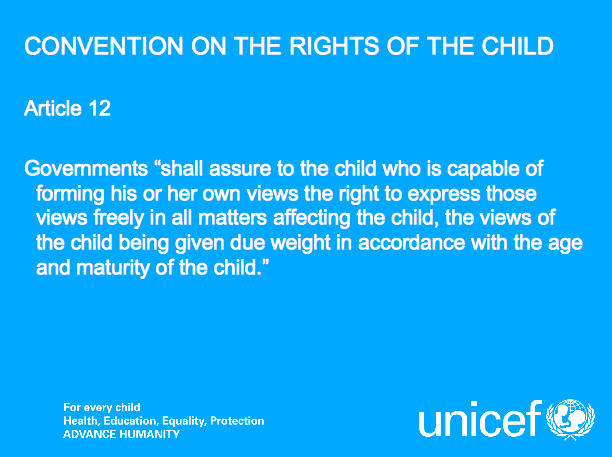
The citizenship agenda should in theory help overall student wellbeing. The central thrust of education for citizenship would ask challenging questions of our rote-learning-centred education system. Article 12 of the UN Convention on The Rights of the Child states that young people should be consulted on issues that affect them, and highlights that children are citizens too, and should be consulted in schools, including in primary (elementary) education. This again was following the experiences in Nordic countries (Sweden, Iceland, Finland, Norway, Denmark) consistently at the top of indices examining ‘enabling environments’. Of course, any system of school democracy can be manipulated, but nonetheless they can contain markers of voice and agency. Most educators agreed about schools’ responsibility to teach about democracy and prepare students to be effective democratic citizens. Moreover, the whole issue of inequalities in society and their impact on the educational attainment and aspiration of school students should be taken into account in terms of rights. Some argue that to believe that these kinds of issues can be addressed in the current school system is to misunderstand the nature of education and make teachers responsible for the ills of society. In any case, the issue of democracy in the classroom is rarely raised, never mind implemented, in the school setting. Headteachers no longer see it as a priority, as the mantras of exam results and testing take on greater significance for them.
In practice, Scottish schools are supposed to have meaningful pupil councils: forums for discussion, consultation, and decision-making involving pupils. Yet the record of school councils is not partularly promising. There were hopes that they would enable pupils to gain an enhanced understanding of the principles of democracy and their roles as active citizens. However, there is often little opportunity for disadvantaged and marginalised students to participate, and thus many voices go unheard, are sidelined or ignored. Many students view pupil councils as ineffective and tokenistic. Students do not value pupil councils because the school appears not to value them. Students raise concerns about issues that teachers predetermine. That student voice is not communicated to those who have ultimate influence over decision-making, and consequently nothing ever changes. In sum, the key critique is that the councils give the pupils voice but not agency.
Towards School Democracy
There are some positive examples. A high school in England in 2026 decided to ditch shirts, ties and blazers and replace them with polo shirts and outdoor coats or jackets. The Headteacher justified the change in terms of the desires of the students as outlined in consultation, what she called ‘big student ask’ (BBC, 2026). Yet there is also a more negative and widespread tendency connected with the question of whether schools should ban mobile phones. The Guardian reported on 24 April, that more than 90% of schools in England ban mobile phone use. According to a headline in The Independent on 25 April, ‘A phone ban offers “potential benefits” for school performance and attainment, as well as children’s wellbeing’. And the Aberdeen Press and Journal announced on 13 May: ‘Phones to be banned in Moray schools after teacher reveals ‘unacceptable’ filming in classrooms’.
This is not the place to explore the rights and wrongs of this issue. There are good arguments on both sides about banning phones. Our point here is that we could not find an occasion in the 30 schools we contacted where this had been raised and consulted at a pupil council meeting. At a basic learning level, what a huge missed opportunity this is for democratic discussion, and for saying to the students, “your voice matters”. But pupil councils are so far down the agenda that it does not occur to the decision-makers, even in those schools which are UNICEF ‘Rights Respecting’, to find out what the students think. Do they support the ban? We think they might. Do they have any ideas to deal with phones being used in antisocial manner? Who knows, since they weren’t consulted. We guess that if this had been an issue twenty years ago, there would have been consultation. Instead of this democratic process, students who do support the ban are trundled out to give half-hearted justifications. Scotland has incorporated into law these rights in the United Nations Convention on the Rights of the Child (Incorporation) (Scotland) Act 2024, which gives students the right to contest infringements in court. By failing to facilitate discussion with the students, have we infringed their human rights?
Stifling discussion and participation is not only counterproductive in terms of democracy. Some research has linked participation and attainment. To take one example: a 2015 study by the Children and Young People’s Commissioner for Scotland found that seven secondary schools in areas of multiple deprivation had higher than expected levels of attainment. Further investigation established that in these seven schools, across all areas of school life, pupils had substantial opportunities formally and informally to take part in a variety of meaningful activities, to take responsibility for events, make contributions to school life and have their views considered in matters that affected them. This participative ethos was closely bound up for learners with “creating a sense of belonging at school, and bringing a rights-based dimension to educational experience.” It would appear that where schools invest in creating opportunities for true participation, dividends can include increased motivation to learn, and improved attainment for learners. Even if this overstates the case – there were only 7 schools in the study – there are clearly some potential advantages to this approach. There is much work to be done to deepen the theory and advance the achievement of rights, equality, and democracy in our schools.
Brian Boyd is Emeritus Professor at the School of Education, University of Strathclyde.
Henry Maitles is Emeritus Professor at the School of Education, University of the West of Scotland.