As European governments invest billions in arms and weapons for growth, skilled labour and industry, Simon Barrow shows how this new “military Keynesianism” won’t develop good jobs but it will drive climate breakdown.
As geopolitical tensions flare globally, western governments are pivoting sharply toward rearmament. Defence budgets are swelling, state mandates are shifting towards military production, and political rhetoric increasingly frames national security almost exclusively in terms of hard power, supposed deterrence, and force projection. Yet this surge in militaristic posturing highlights a glaring structural trade-off: every unit of capital, energy, and human intellect directed toward the mechanics of war is a resource diverted from the existential crises of climate breakdown and the collapse of biodiversity.
The maths of state funding capacity is unforgiving. Governments like the UK operate under fiscal constraints within neo-liberal framing. When public funds are reallocated towards rapidly expanding arms procurement, subsidising arms exporters, and sustaining the ever-growing cost of a faltering replacement programme of the UK’s nuclear-weapon system, this happens at the direct expense of social and environmental security – and especially the rapid decarbonisation required to keep global temperatures within liveable thresholds.
Building a low-carbon society demands unprecedented public investment. By prioritising military expansion over ecological resilience, policy makers implicitly signal that preparing for hypothetical conflicts takes precedence over surviving guaranteed ecological disruption.
This rearmament doctrine is increasingly justified through ‘military Keynesianism’. That is, the belief that military expenditure can serve as a primary engine for economic growth, industrial strategy, and high-skilled employment. However, recent analysis published by the Royal United Services Institute (RUSI) and the IPS Journal show why military Keynesianism is a dead end, both economically and ecologically.
Framing defence investment as a path to broad prosperity ignores its remarkably poor ‘multiplier effects’. Capital spent on modern arms production is concentrated in low-volume, capital-in tensive manufacturing that creates surprisingly few jobs. For example, modelling indicates that UK Ministry of Defence procurement supports roughly 9.4 jobs per £1 million spent, whereas equivalent investment in healthcare, education, or green energy yields dramatically higher employment returns.
Furthermore, military spending yields non-productive output. While public infrastructure, clean transport networks, and green energy grids lower long-term economic costs and enhance structural productivity, arms hardware yields no ongoing social or economic utility once manufactured. Relying on military-led ‘moonshots’ in deep tech or artificial intelligence to drive civilian innovation is a costly gamble. If the goal is civilian technology, direct public in vestment in green industrial development is far more effective than hoping for incidental spillovers from weapon design.
Crucially, rearmament actively exacerbates the very ecological crisis it displaces. Militaries are among the world’s largest institutional consumers of fossil fuels. Expanding military capabilities locks economies into carbon-intensive technologies and supply chains at the precise moment when fossil fuel reliance should be being dismantled. In Europe, this dynamic presents a profound geo-political irony: because petrostates, including Russia, derive their power from global fossil fuel demand, building a war machine powered by fossil energy leaves nations structurally dependent on the very fuel exports that finance aggressive foreign adversaries. There are also the emissions which a war like that on Iran, involving UK strikes, create directly. Decarbonising energy grids and eliminating fossil fuel addiction is therefore a far more direct blow to autocratic petrostates than procuring additional conventional weaponry.
The capture of key parts of the trade union and labour movement in backing military expansion creates a profound political paradox. Organised labour was founded to protect working-class interests, yet working people bear the heaviest burdens of climate disruption, energy poverty, and underfunded public services. Channelling political support behind illusory promises of defence jobs anchors working communities to volatile geopolitical cycles and corporate arms lobbies.
A genuine Just Transition must redirect advanced engineering, technical skills and manufacturing capacity away from legacy ‘big weapons’ projects and toward the urgently needed shift away from carbon dependence. The industrial competencies used to produce military hardware are directly transferable to offshore wind, marine energy, green hydrogen, and zero-carbon transport systems. However, remarkably little attention and investment has gone into the kind of industrial transition that will be required over the next two decades to avert impending climate catastrophe. Indeed, arms lobbyists, fossil fuel companies and nuclear power proponents are now working in lockstep to maintain ‘business as usual.
What we need in Scotland and elsewhere on these islands is a green industrial revolution. One with workers and communities as its driver, democratic local economies at its heart, and a radical rethink about military defence as a dimension – but not the hegemonic claimant of – human, economic, social and environmental security. This includes the question of how to wrest back control of AI and use it in ways that enhance rather than destroy our human and ecological future.
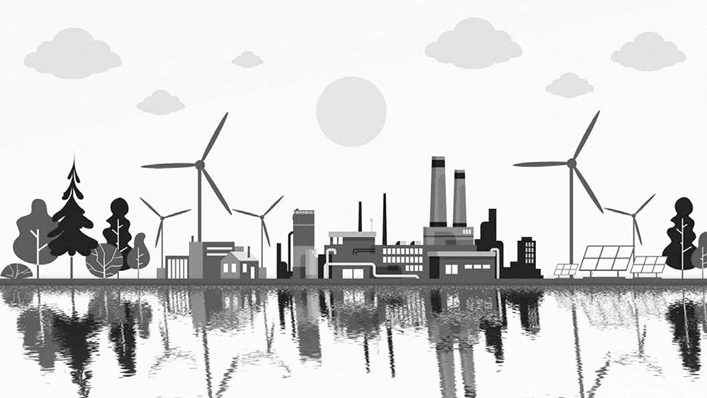
The agenda is massive, but our starting points need to be focussed. Building on past work on defence diversification among trade unions and the 2025 Alternative Defence Review, Scottish CND is currently engaged in research on precisely how Scotland, first with existing powers and then with the much more extensive ones required, can create a meaningful Scottish Transition Agency, rethink real-world security and defence needs, and support local participatory action research on the alternative economic, industrial, energy and environmental future we all need.
Among other things, this involves mapping where jobs are and where and how they can be transitioned, and building bridges between those trade unions who see through the lie of military Keynesianism and those in the defence sector who do not yet see a workable alternative.
It also entails spelling out why the Trident nuclear-weapon pro gramme is the great white elephant of our moment (and an existentially dangerous one, militarily and environmentally), and how nuclear decommissioning could be an enormous economic boon for Scotland. The aim is to produce an initial report in April next year, with proposals for government, trade unions, civic and environmental groups which set the stage for a continuing project for engaging people in solutions rather than just protest.
Looking at the larger picture, governments cannot escape the fundamental trade-off between guns and greenery, though they can defer, obfuscate, and bow to wealthy corporations and interests. That is why political pushback is so vital, along with the plans and proposals which demonstrate workable alternatives.
The central truth behind all this is that security cannot be bought with artillery shells and fighter jets if the ecological foundations of human civilisation are allowed to collapse. Reclaiming public capital for a green industrial strategy and opposing a war economy is not merely a moral preference, it is the only rational foundation for shared prosperity, sustainability and long-term security