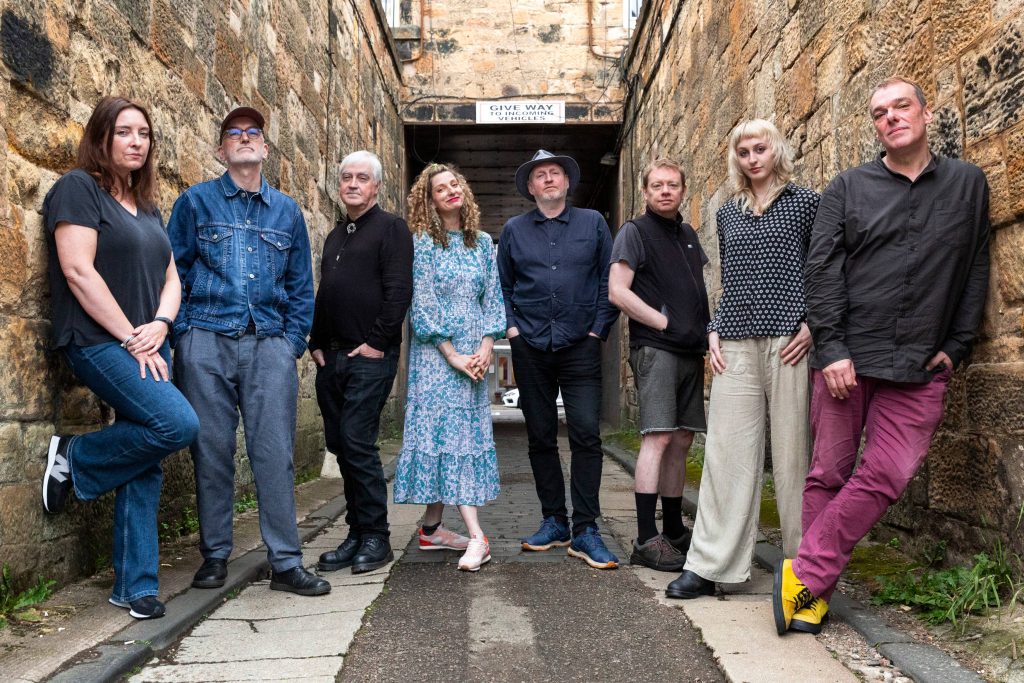
Theatre-maker and filmmaker Robert Rae talks to David Archibald, The Tenementals’ singer-songwriter, about their new album and the making of political art.
Written in Borgenmoor Concentration Camp by left-wingers imprisoned by the National Socialist government for opposing fascism and the slaughter of disabled, Gypsy-Traveller and Jewish people, “The Peat Bog Soldiers” (“Die Moorsoldaten”) was sung for the first time in August 1933 in defiance of SS guards, amid the heath and bogs where the prisoners were forced to toil under a birdless sky:
But for us there is no complaining
Winter’s months must soon be o’er
One day we will cry rejoicing
Home, my dear, you’re mine once more
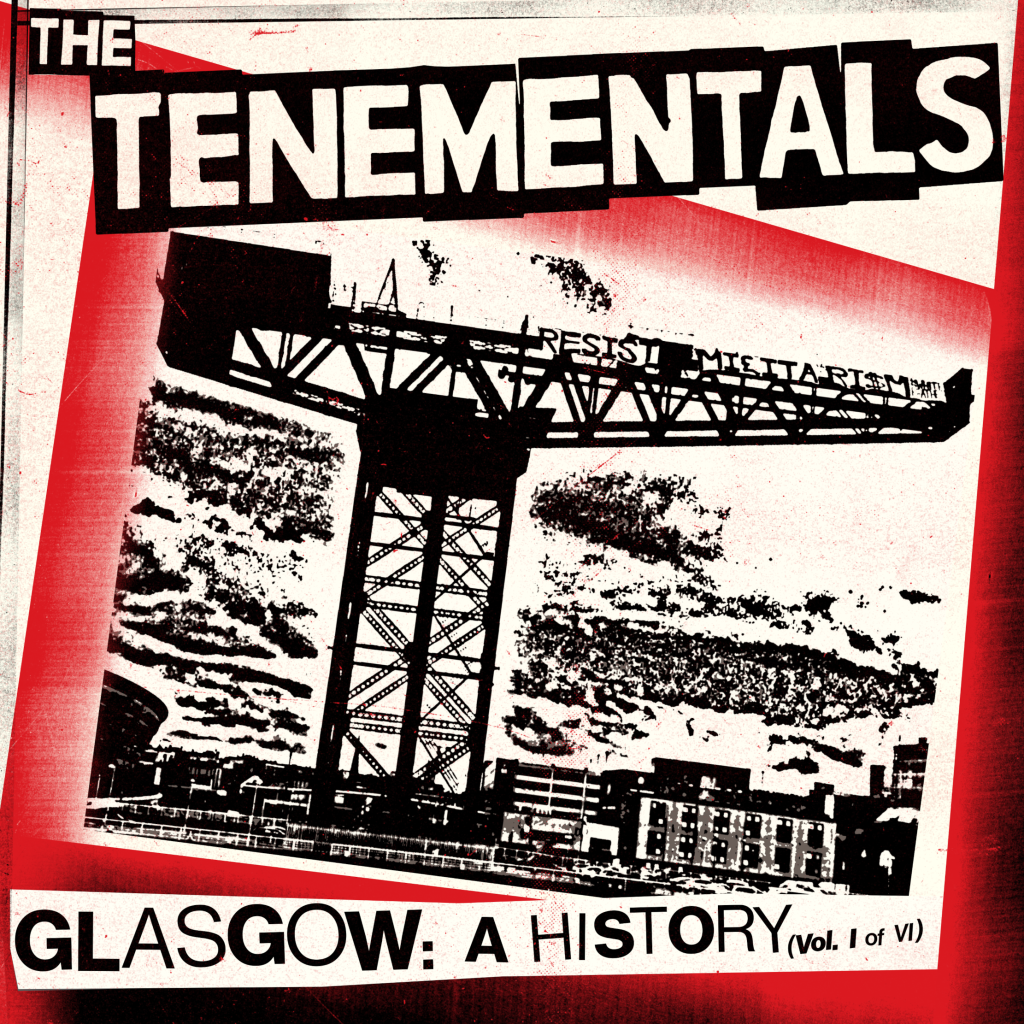
It was “Peat Bog Soldiers” that brought me to Oran Mor and the launch of the new The Tenementals album, Glasgow: A History (Vol. I of VI). As young anti-fascist activists we’d been inspired by Die Moorsoldaten and emboldened by the music of The Clash, Tom Robinson, and The Specials, and here was a band working in a similar genre. Could it still work? When I met David Archibald to talk about the album, I asked him how the song made the line-up.
David: I didn’t know “Peat Bog Soldiers” that well. We were doing a striking workers benefit gig in Glasgow in February 2023, operating on the logic that a rock band needed a cover to keep the set alive. I’d been making a documentary with a colleague from Catalonia about ‘sites of memory’ and was thinking about a German song connected to the Spanish Civil War, but my German’s not very good, so I checked it out with a German activist who said “Dave, the big song’s Peat Bog Soldiers, Die Moorsoldaten”. I knew it as a protest song, but when I listened to it I thought, what a great tune! We did a new translation, sang it slightly different, and put a young woman at the heart of it. Usually sung by men in a more militaristic form we tried to do something new.
It fitted with the broader project to try and get people to think historically, find radical moments in the past, care for them, nurture them, hold on to them, not keep them in the past. Creative outputs live in their own world, so if people just listen to the songs that’s grand. But the more people find out about radicals from the past then the more they might be interested in how their ideas might be put to work in the present.
Robert: I began my theatre career with 7:84, and my time there coincided with the Miners’ Strike of 1984/5. We toured to large theatres with “Six Men Of Dorset”, an old Unity play about the Tolpuddle Martyrs, agricultural workers who were transported for forming a union and brought home again by a labour movement mass campaign. It happened to be the 150th anniversary and we were deliberately evoking the historical memory. Audiences rose at the end, clenched fists declaring “The Miners United Will Never be defeated.”
These kinds of memories were evoked by your song on the new album called “Universal Alienation”, inspired by Jimmy Reid and the powerful speech he gave upon being made Rector of Glasgow University. “We’re not rats we’re human beings” is the chorus of your song, and it was taken up enthusiastically by the live Oran Mor audience. I was also glad that in the song you didn’t let Reid off the hook for the position he took in refusing to support the striking miners. Did you set out to tell a particular story or paint a particular character of Reid in the album?
David: When I left school, I worked in John Brown’s, one of the shipyards or more correctly former yards — it diversified and made gas turbines. I was a steward, for the AUEW-TASS — the white-collar sector of the engineering union – and I proposed that we support the STUC’s call for a half-day general strike and that all members donate a pound a week to the Miners. We marched along to the town hall and had a mass meeting, where the workers didn’t agree to participate in the stoppage but agreed to the pound uplift. As I’d raised the motion and was a steward, I had to get the pound from the members in my work. When people didn’t pay, I had to try and persuade them. The number of times I heard “Jimmy Reid says there should have been a ballot”, “Jimmy Reid says the miners are violent”… I was 19, a young activist, and I knew who he was but didn’t know much. I was like “fuck Jimmy Reid man”. He was an excuse used by people that didn’t want to pay. It was Clydebank – Jimmy’s own stomping ground – and he was being used against the miners!
Two things about that: first, he was wrong at the time; second, he’s been proven to be wrong. Forty years later the discourse around the miners’ violence has changed, with the Orgreave Campaign forcing out an acceptance that the state was involved in violent behaviour. At the time there were many people having a pop at him. But what do you do with people who have done some magnificent things and some things which were not so magnificent. As Brecht said, “unhappy is the land that needs a hero”.
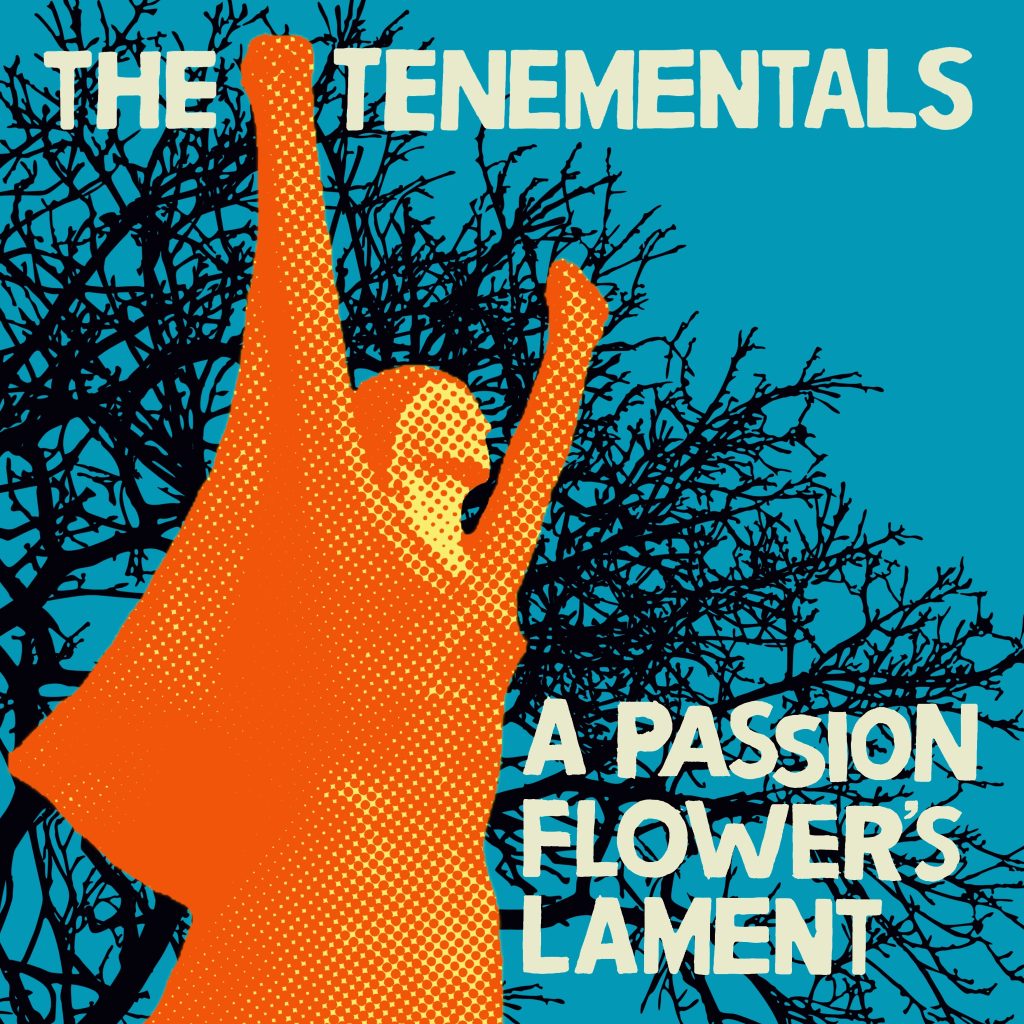
Robert: Your introductions to the songs encouraged me to research the characters and incidents you mention. I was struck by “A Passion Flower’s Lament”, a really beautiful song about the Spanish Civil War and about Castelldefels, where International Brigade volunteers soldiers accused of indiscipline were incarcerated by their own side.
David: Without taking away from the courage, bravery and idealism that took them there, my visit toCastelldefels a few years ago was a real eye-opener. I was in the castle used as a prison for dissident International Brigaders, and I saw the leftist iconography created by those detained there. Of course, each of the men that fought and died in Spain was a hero.
We’re not saying anything that tarnishes them in any way, but it is complicated. The song asks the question: don’t we need to know all about that? Do we need to know about these divisions because the fascists are coming back, we can see them, and we need to be alive to that? When I was a teenager, I read all the books about Spain and argued with the different traditions. Maybe there’s a need for that discussion to take place but in a different way. I think it is taking place to some degree, in part because the left has got smaller. We can huddle together a little bit and the debates about Spain can be more open and comradely.
Robert: The language we use to describe these struggles can shape how they teach us about the past and present. The day of your gig I had been discussing the function of the dialectic and the didactic in documentary storytelling with the film-maker Ashok Prasad – he was asserting that they were opposites, and I disagreed. Anyway, I invited him to come along to see you at Oran Mor, which we both really enjoyed. We both chuckled at your introduction to the song “Post Production” as “probably the only song ever written about film policy”. You raised important issues about Screen Scotland’s focus on attracting big films by offering locations rather than doing the hard creative work of developing films about Glasgow. Inevitably these decisions impact upon people’s relationship to the place they live in. Do you see your album as being mostly critical, or do you see it contributing to shaping people’s relationship to Glasgow?
David: Someone I know came to the first gig we did, she’d just arrived in the city and said “that was amazing because I don’t really have a history of Glasgow at all”. So in uncovering these tiny fragments – Purly Wilson, Jesse Stephen – it would be amazing if people then took these pieces forward, and took a step beyond, to think about the city as constantly changing. Talking about the meaning of these fragments in between the songs was a kind of happy accident. I was initially thinking we would just do the songs but Bob Anderson, the drummer, was very keen on including little stories between the songs. Later, a friend said people like the stories in between as much as they like the songs; they don’t explain the songs but they allow you to feel and think about what they’re about.
Robert: The interspersing songs and stories about Glasgow with ‘covers’ from struggles and resistance across the world gave a sense of resituating the history of Glasgow and its song culture among the popular histories of elsewhere. We were treated to a beautiful Victor Jara song, and it made me think about the Chilean song movement and their search for popular songs that spoke to the people. We’re good at supporting the cultural rights of others, and rightly proud to do so, but have we been neglecting the rich cultural heritage of the Left and Labour movement? I remember at 7:84 and again when running Theatre Workshop that my work was regularly criticised for “preaching to the converted”. Is that what you are doing?
David: That phrase is taken from the church, and they found great value in preaching to the converted over hundreds of years, so yes, it’s a critique but I also think there’s great value in bringing together people who are already committed to trying to build a better world and talking to them about our shared histories. Johnny Rodger, a professor at Glasgow School of Art, introduced one of our gigs and commented that, at least for some people, The Tenementals may not tell you anything that you don’t know, but they tell you it in a way which makes you see it afresh. I think there’s value in bringing people together from radical traditions. But I think we do more than that: we expand what we know, sometimes just by chance. We’ve found that there’s an interest which goes way beyond the converted. We’ve found that there’s a real thirst for radical history when it’s presented in a new way.
The Tenementals’ debut album Glasgow:A History (Vol. I of VI) is released by Strength in Numbers Records and available online and in local record stores. The Tenementals will be touring in spring/summer 2025
| Robert Rae is a theatre and filmmaker, currently Co-Director and artist in residence with Art27 Scotland. |