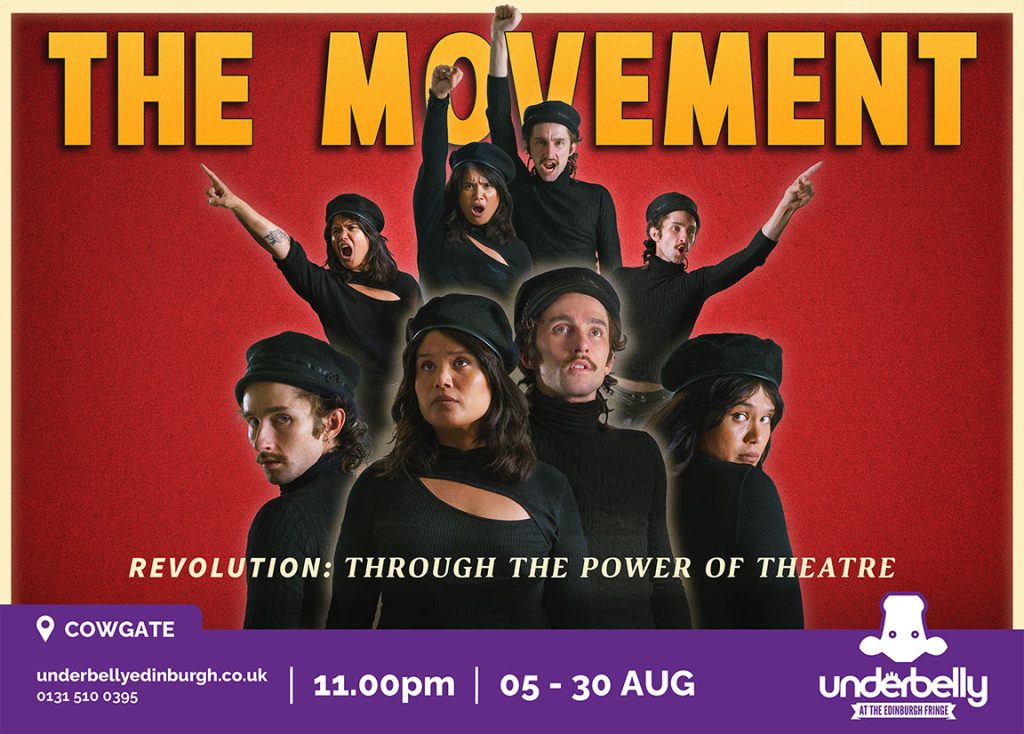
Cailean Gallagher reviews ‘The Movement’ at Underbelly (11pm, 5th-30th August).
★★★★
As I left the chaos of The Movement for the cacophany of Cowgate at midnight, I felt as if I had just witnessed a psychoanalytic session to help uncertain young revolutionaries deal with the long-suppressed effects of the events of 11th September, 2001.
What do you remember about 9/11? How did you feel? Myself, I have just two strong 9/11 memories. In one, I am sitting on the sofa, transfixed by the images on the telly of those planes smashing into the Twin Towers. In the second, I am in my school playground watching schoolmates guiltily, gleefully acting out the whole performance, blending anti-islamism and anti-imperialism, satirising Bush and Bin Laden in equal measure.
A quarter of a century later, The Movement’s two-clown cast went for the same targets, through a sketch of George Bush riding Dick Cheney (‘the Vice on which he rocks’), a tribute involving an inflatable plane, a rap in the style of Hamilton (‘It’s been 25 years shedding patriotic tears’…), and an eerie and inadvertant conjuring-up of the ghost of Bin Laden.
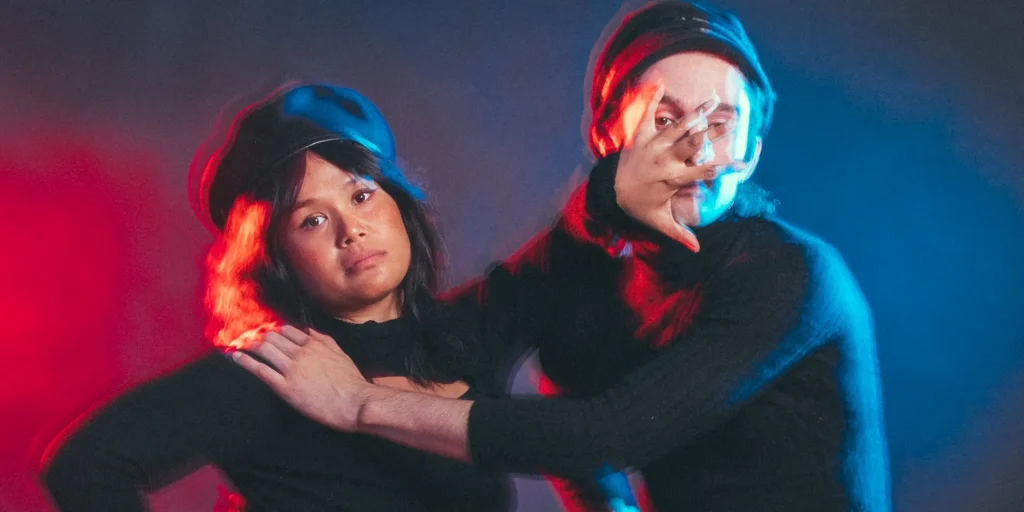
Much of the show was framed around a big red button that the audience was told would blow up George IV Bridge, in whose vaults we sat. It toyed with the Guy Fawkesian trope that throughout history, both theatre and terror have played a major part in revolutionary struggle. Yet for the post-9/11 generation, incendiary destruction is indelibly associated with right-wing terrorism rather than left-wing revolutionary movements. The show’s central question, then: how excited should today’s revolutionies get about blowing things up? What would Chairman Mao, Uncle Ho, Malcolm X have done? What should today’s movement do?
In the end, Ethan and Gigi’s revolutionary metaphor of choice involved a red thread wound through the audience’s hands, representing the links that we all have in common, from the banal to the ridiculous. Their strange, climactic dance, delighting in the coming revolution, drew inspiration from mystic love and erotic exhibition rather than any instruments of terror or the war upon it. This absurd, bemusing, but ultimately pretty funny adventure was clearly the work of actors with both a passion for rebellion, and real uncertainty about what revolutionary life entails.